
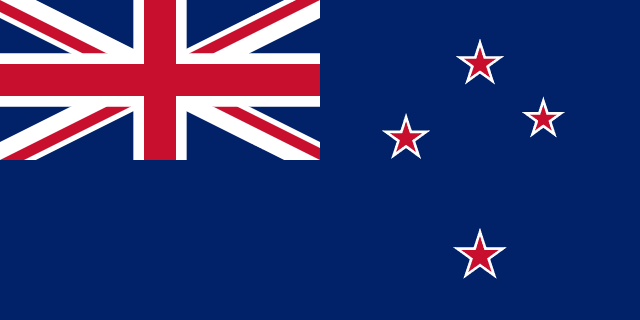


World Flags / New Zealand
About the New Zealand National Flag
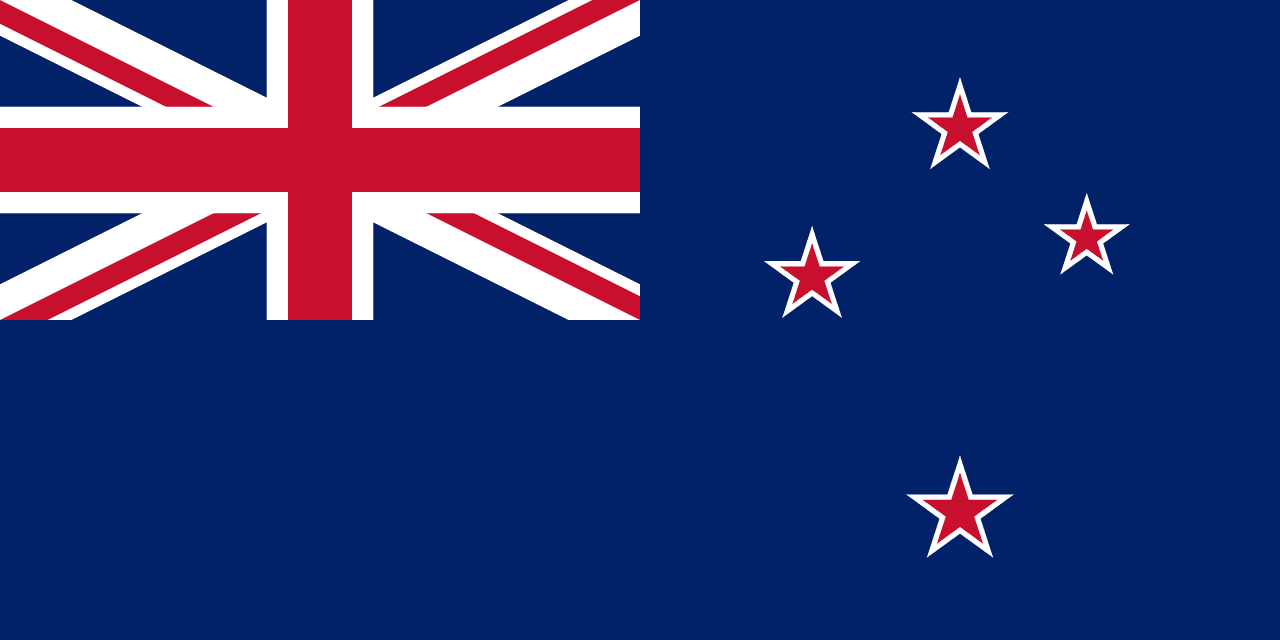
Four red stars with white borders represent the Southern Cross, essential to Polynesian and European navigation to New Zealand.
New Zealand — Key Facts
| Capital | Wellington |
|---|---|
| Population | 5.2 million (2024 est.) |
| Area | 268,838 km² |
| Languages | English, Māori, and New Zealand Sign Language (official) |
| Currency | New Zealand dollar (NZD) |
| GDP (nominal) | ~$250 billion USD |
| Independence / founded | Dominion status 1907; fully independent constitutionally by 1947 |
| Flag adopted | 1902 |
New Zealand Flag Colors and Meaning
Each color on the New Zealand flag carries symbolic meaning. Use this table when teaching geography or designing watch-party displays.
| Color | Meaning |
|---|---|
| Blue | The sky and sea surrounding Aotearoa |
| Red (Southern Cross stars) | Guidance for navigators |
| White (stars and fimbriation) | The long white cloud (Aotearoa) |
People and Ethnicity in New Zealand
European (Pākehā) majority alongside Māori, Pacific Islander, and Asian communities. Te Tiriti o Waitangi shapes bicultural policy.
Geography of New Zealand
Two main islands with Alpine South Island peaks and volcanic North Island geothermal zones.
Economy of New Zealand
Agriculture (dairy, lamb, kiwifruit), tourism, film production, and tech startups drive growth.
- Currency: New Zealand dollar (NZD)
- GDP (nominal): ~$250 billion USD
Culture
Māori haka, rugby All Blacks, Lord of the Rings landscapes, and café culture in Wellington.
Display the New Zealand Flag Fullscreen
This page is the free online New Zealand flag screensaver. Scroll up, click the preview, or press F for fullscreen. No download or signup required.