
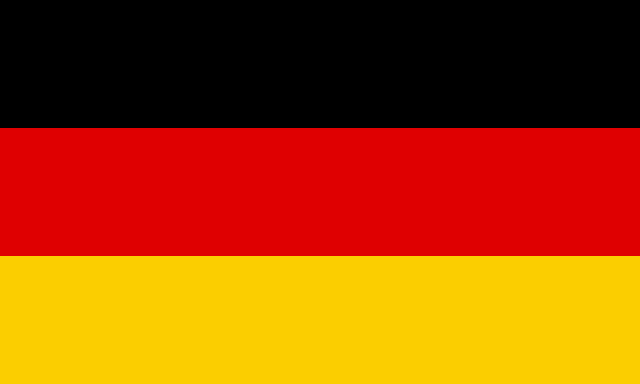


World Flags / Germany
About the Germany National Flag
The black-red-gold tricolor dates to the 1848 revolutions and the Weimar Republic. It symbolizes democratic unity after division during the Cold War.

Germany — Key Facts
| Capital | Berlin |
|---|---|
| Population | 84 million (2024 est.) |
| Area | 357,022 km² |
| Languages | German (official) |
| Currency | Euro (EUR) |
| GDP (nominal) | ~$4.5 trillion USD |
| Independence / founded | German reunification October 3, 1990; Federal Republic since 1949 |
| Flag adopted | 1990 (readopted after reunification) |
Germany Flag Colors and Meaning
Each color on the Germany flag carries symbolic meaning. Use this table when teaching geography or designing watch-party displays.
| Color | Meaning |
|---|---|
| Black | Determination and the dark past overcome |
| Red | Bravery and the blood shed for unity |
| Gold | Generosity and enlightenment |
People and Ethnicity in Germany
Ethnic Germans form the majority with Turkish, Polish, Syrian, and other immigrant communities. Regional identities in Bavaria, Saxony, and elsewhere remain strong.
Geography of Germany
Central European federation from North Sea coast to Bavarian Alps, with major rivers Rhine, Danube, and Elbe.
Economy of Germany
Europe's largest economy, built on manufacturing exports—autos, machinery, chemicals—and Mittelstand SMEs. Energiewende policy drives renewable transition.
- Currency: Euro (EUR)
- GDP (nominal): ~$4.5 trillion USD
Culture
Classical music heritage (Beethoven, Bach), Oktoberfest, football passion, and a strong vocational education tradition.
Display the Germany Flag Fullscreen
This page is the free online Germany flag screensaver. Scroll up, click the preview, or press F for fullscreen. No download or signup required.