
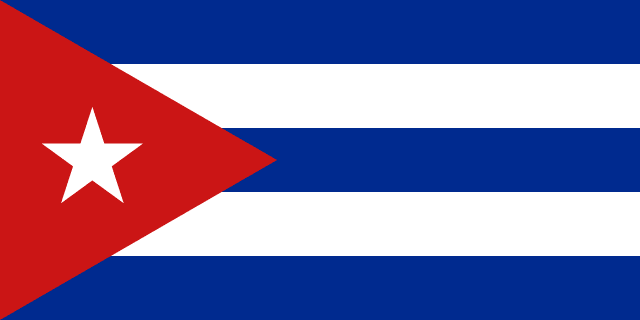


World Flags / Cuba
About the Cuba National Flag
Designed by Narciso López for liberation from Spain; adopted after U.S. occupation ended in 1902.
Cuba — Key Facts
| Capital | Havana |
|---|---|
| Population | 11 million (2024 est.) |
| Area | 109,884 km² |
| Languages | Spanish (official) |
| Currency | Cuban peso (CUP) |
| GDP (nominal) | ~$110 billion USD |
| Independence / founded | Republic 1902; Revolution 1959 |
| Flag adopted | 1902 (current design with star) |
Cuba Flag Colors and Meaning
Each color on the Cuba flag carries symbolic meaning. Use this table when teaching geography or designing watch-party displays.
| Color | Meaning |
|---|---|
| Blue stripes | Three original departments of Cuba |
| White stripes | Purity of independence ideals |
| Red triangle | Equality, fraternity, and blood of martyrs |
| White star | Independence and the lone star state |
People and Ethnicity in Cuba
Mixed European and African heritage predominates with smaller Chinese and Indigenous Taíno traces.
Geography of Cuba
Largest Caribbean island with rolling plains and Sierra Maestra mountains.
Economy of Cuba
Tourism, nickel, tobacco (cigars), rum, and medical services exports despite U.S. embargo.
- Currency: Cuban peso (CUP)
- GDP (nominal): ~$110 billion USD
Culture
Salsa, son music, classic American cars, baseball, and Afro-Cuban Santería traditions.
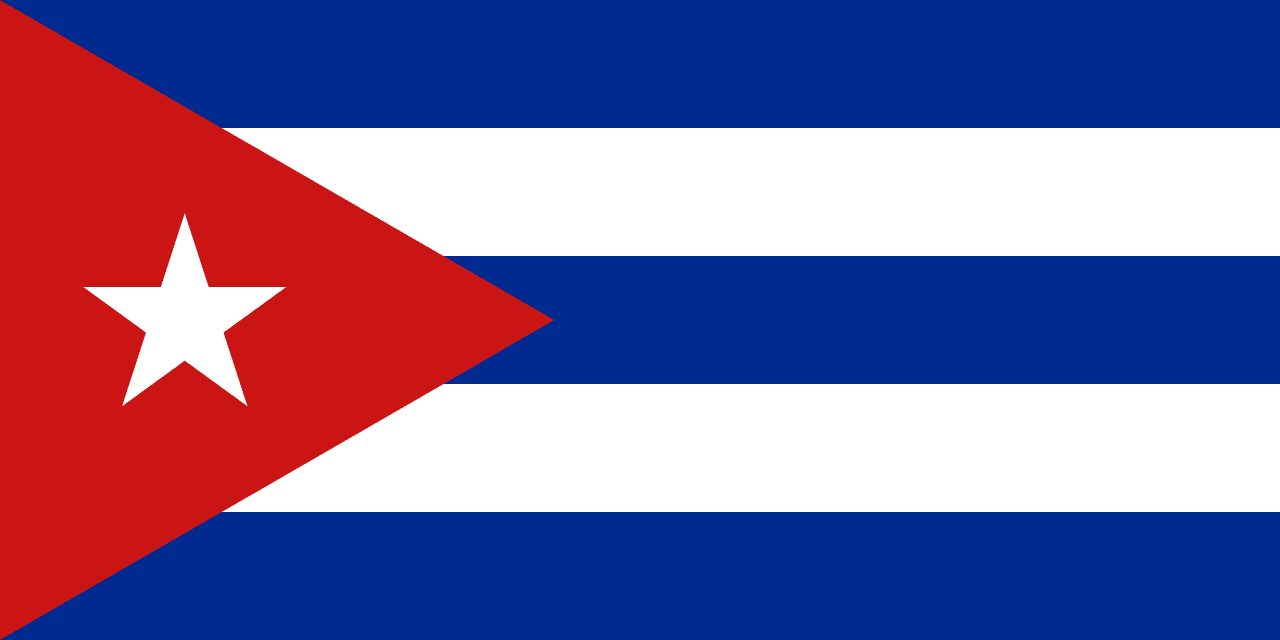
Display the Cuba Flag Fullscreen
This page is the free online Cuba flag screensaver. Scroll up, click the preview, or press F for fullscreen. No download or signup required.