
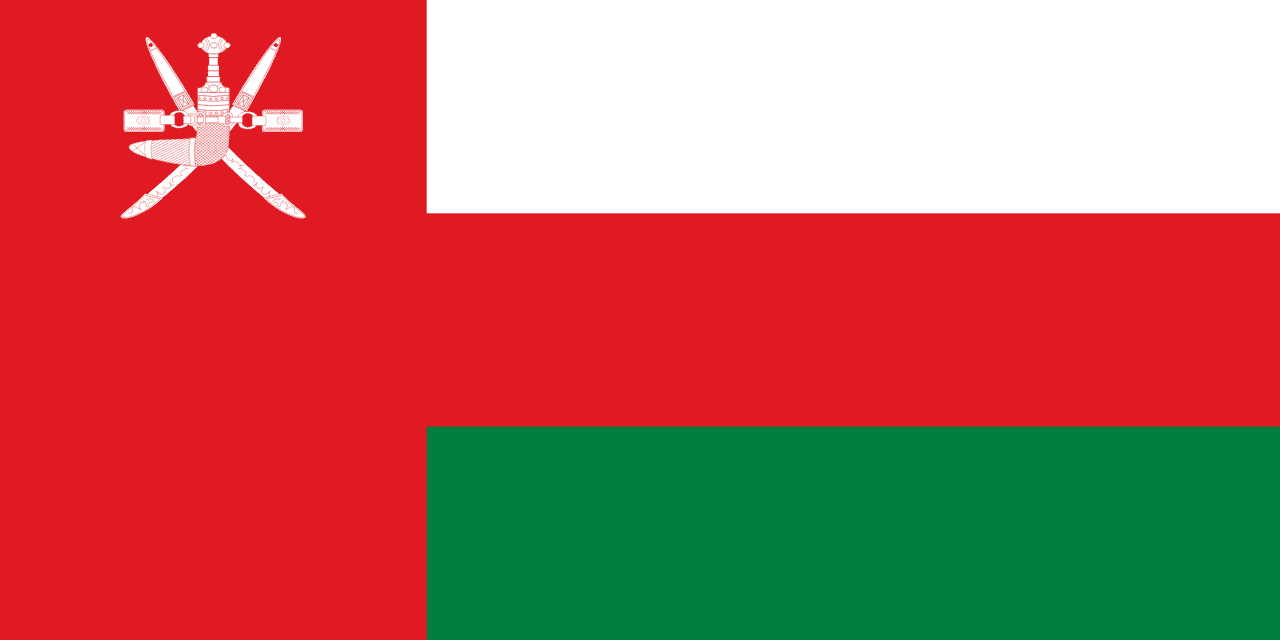
The flag of Oman is more than cloth and color — it is a compact story of geography, history, and identity. This guide explains the symbolism of the Oman national flag, then covers population, ethnic makeup, and the modern economy. When you are ready to display it fullscreen, open the free Oman Flag Screensaver.
Quick Facts About Oman
| Fact | Detail |
|---|---|
| Capital | Muscat |
| Region | Asia |
| Population | 5.2 million (2024 est.) |
| Area | 309,500 km² |
| Official languages | Oman has diverse linguistic heritage; a national language anchors education while regional and minority languages thrive locally. |
| Currency | national currency tied to regional trade |
| GDP (nominal) | ~$70 billion USD |
| Founded / independence | Oman's modern state formed through 20th-century independence or republican transformation. |
| Flag adopted | 1981 (current design) |
Meaning of the Oman Flag Colors
The flag of Oman uses colors and symbols reflecting national history, geography, and the aspirations of its citizens. Adopted in the modern era, it appears at government buildings, schools, and international events representing Oman on the world stage.
| Color | Meaning |
|---|---|
| Red | Battles fought for country |
| White | Peace and prosperity |
| Green | Fertile land (Al Jabal Al Akhdar) |
| Khanjar dagger | Traditional Omani weapon and heritage |
Understanding these colors helps students, travelers, and fans recognize why the flag looks the way it does — and why it still matters at ceremonies, stadiums, and embassies worldwide.
History Snapshot
Oman's modern national story is often dated to Oman's modern state formed through 20th-century independence or republican transformation.. The current flag design is associated with 1981 (current design). Flags change when borders, regimes, or national myths change; studying the Oman flag is a shortcut into that political and cultural timeline.
People, Ethnicity & Society
Oman is home to long-established ethnic groups and minority communities. Shared citizenship binds diverse languages, cuisines, and festivals.
Languages spoken include Oman has diverse linguistic heritage; a national language anchors education while regional and minority languages thrive locally.. Demography shapes everything from local festivals to diaspora communities abroad — many of which fly the Oman flag at cultural centers and national-day parades.
Geography
Oman occupies varied Asian geography—plateaus, river deltas, coastlines, or highlands—that influences agriculture and settlement patterns.
Land and climate influence crops, trade routes, and settlement patterns, which in turn shape the economy described below.
Economy of Oman
Oman balances traditional agriculture with industrial and service sectors. Export manufacturing, tourism, or resource extraction often anchor foreign exchange earnings.
Currency: national currency tied to regional trade.
Approx. GDP (nominal): ~$70 billion USD.
For learners and content creators, pairing economic headlines with a visual of the national flag makes abstract numbers feel concrete — especially on a classroom projector or second monitor.
Culture
Oman preserves ancient customs alongside contemporary arts and cuisine. Temples, markets, and seasonal festivals anchor social life.
Fun Fact
Oman contributes unique traditions and natural heritage to the Asia region, with local landmarks and customs that distinguish it from neighboring countries.
Display the Oman Flag Fullscreen
Want a living version of the flag on your TV, monitor, or projector?
- Open the Oman Flag Screensaver.
- Press F or click Fullscreen.
- Leave it running for lessons, events, or ambient décor.
- Press ESC to exit.
You can also browse all world flags — over 190 countries — with filters by continent, random slideshow, or a locked single flag.
Related Reading
- World Flags Meaning Guide — hub for every national flag article
- World Flags Screensaver — interactive tool
- Oman Flag Tool — dedicated fullscreen page
Related tools: Digital Clock · Countdown Timer · Quotes Screen